Should anyone ask, if I did this again

This is a post for future-Simon.

Background: Admin kills me. It absolutely hammers me into the ground. I hate it, I don’t value it and it torments me until I find a way to get it done. So much hate. Server admin – love. ActualReality™ – not so much love.

Running your own company ramps up the admin immensely. Accounts, paying people (love that I can, hate the process), taxes, random paperwork. It’s horrible. 

This morning while cycling to work conversation went something like this: “Do you think $hero has to do this?” 

Answer: “No he has someone do it for him”.

Wow. I like that.

This is a note to future-Simon:

  • You don’t have to be good at this.
  • You can outsource it easily.
  • Outsourcing looks like “Make a checklist. Pay someone to work through the checklist once a month with you”
  • When $item arrives, put it on the stack and forget about it.
  • Hold the stack until the 3rd or 4th of the month (sometime not too early to miss end-of-month invoices, but early enough to make sure you get everyone paid nicely on time)
  • Have them work through the list with you.
  • Put this as a monthly, repeating calendar appointment so it just happens. 

Outcome:

  • Worry less about the things you don’t enjoy
  • Become better at asking for help
  • “Some people actually enjoy this stuff”
  • Live longer with less stress

That sounds pretty good to me.

image

Should anyone ask, reading about ABCs

Imagine some blind people describing an elephant. One might suggest that it feels like a tree. Another holding the tail would suggest it’s like rope. Each has a different perspective. And although they are all touching the elephant they end up arguing over whose perspective of the situation is correct.

This week I’m thinking about other ways of viewing thoughts. Too often I am not taking the time to be curious about the other person’s perspective or putting myself in other peoples’ shoes and getting their picture is a valuable exercise.

In cognitive therapy there’s the idea of ABCs: an Activating event, a Belief, and negative emotional Consequences. 

This ends up distorting our thinking and I know that I’m guilty of slotting events into categories based on beliefs that don’t serve me well. Some that I could think of as

  1. Black-and-White – Thinking or either / or thinking.
  2. Making Unfair Comparisons – usually in the negative
  3. Filtering – honing in on the negative, forgetting the positive.
  4. Personalizing – The Self-Blame Game
  5. Mind-Reading – thinking we know what others think (negatively)
  6. Catastrophising – imagining the worst case scenario
  7. Overgeneralising – “I always mess up…”
  8. Confusing Fact with Feeling – “If I think or feel this way then my thoughts/feelings must be correct’.
  9. Labelling – I’m  a loser vs. I made a mistake.
  10. “Can’t Standitis” – being unnecessarily intolerant

My theory on solving this is to change my inner voice. I heard someone describe it as “If we talked to our friends the way we talk to ourselves we wouldn’t have any good friends.”

Some of the through grooves in our brains are deeply worn. Noticing that some thoughts that aren’t so helpful for me, I’d like to work on developing more cognitive flexibility, more diversity in how I think and being more aware of when I’m falling into old thought patterns.

I think this should be possible by reducing the rushing, being more consequent and dare I say it, mindful (seems like it’s the phrase of the year).

image

Should anyone ask, interuptions

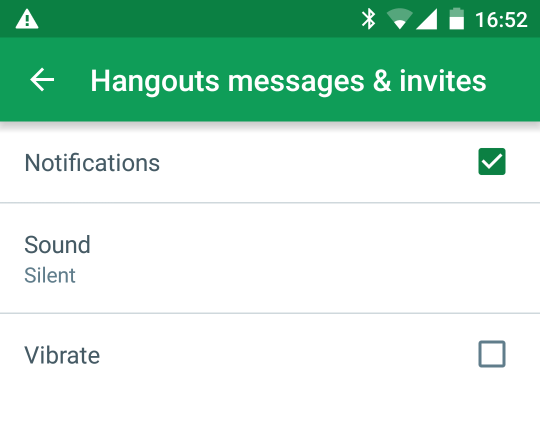
I recently received a replacement phone and have been systematically going through and disabling every single notification that vibrates or makes a sound.

It makes me feel like I’m clawing back some control over the interruptions that divert my attention. And sure it might only last for a second, but I come back to my mental bandwidth thinking: we only have so much time per day to think and communicate. An interruption that pulls me away from what I’m focusing on is the same as someone calling me. It takes a while to get back into the thought I was having. And I’d like my thoughts to be higher quality than interrupt driven “A friend of your’s in San Francisco checked into a place you don’t even know”.

And still they keep coming… just when I think I’ve found all apps that interrupt me there’s a new one.

I’ve also been taming Facebook: friend’s from pre-primary school are now unfollowed. “Friends” are unfollowed. Friends are followed. And that feels good.

Should anyone ask, I ran

I ran this morning. It was good.

Yesterday evening I chatted with a friend. She helped me put things into perspective. Perspective helps. There’s the Churchill quote (not exact) “when you walk through the valley of darkness, keep walking”. But knowing that you are in a valley with an ends helps. Moving forward always helps me.

I’ve been a big fan of Mixergy. Today I’m listening to Andrew Warner’s discussion about creating a mastermind group. And the power of turning over problems verbally as a way of getting stuff out of the countermind.

I tried creating a mastermind group when I lived in Munich. But after listening to this interview, good mastermind groups are made of up people who are at the same level. I’d like to create a new group. Some takeaways from the interview are:

  • meet every fortnight
  • meet for 90 minutes on a Hangout / in person doesn’t matter and commute time destroys productivity.
  • start with an inspiring quote.
  • then 10 minutes of general chit-chat.
  • jump into updates
  • two modes of feedback requesting: “gloves off” or “just feedback please”
  • set individual goals for the next meeting
  • A mastermind group needs a group leader to keep things on track.
  • The phrase “you are saying one thing, but your body language is saying something else” can help dig into things.

So I’d like to start a mastermind group with people working on SAAS products. Reach me on simon@imaginator.com to see if you would be a good fit.

image

Should anyone ask, everything is a mountain.

What do you when you’re at work sitting in front of a computer trying and failing to concentrate on the code in front of you?

When even the most straightforward requirements seem like an impenetrable nests of complications and edge cases to your tired mind?

I find myself just staring into my computer, for hours. No movement, just staring.

11 weeks to go until the Christmas break.

At the same time I’m working on something that could potentially be really exciting and have a huge impact. But just want to walk away and curl up in a ball. And just want to go away next week. But I have no idea where to. Or who with. Or if I can justify it. Or even deal with the planning mountain.

Tomorrow I’m supposed to be excited and giving a talk in Hamburg. I want to stay in bed. 

Changes:

  • Morning running. I need to get this back on track. Signed up for the Berlin half marathon in April.
  • Consulting. Feel better about finances. No point in worrying about this if I can fix it.
  • Ask for help. I have lovely friends. I have a hard time asking for help.
  • Connect with friends. Past depressions have been my mind overheating: stuck in a loop looking for an answer that isn’t there for the finding. 
  • Rock climbing. I want to start this again. I like it because of the intensity. I can’t think of anything else when I’m on the wall. And it’s nice to just think about one thing at a time. 

Should anyone ask, strategy

My thinking can often drift off into the details. A strategy talk will quickly become me latching onto a small problem and the conversation or thinking process stops being big picture. To avoid this I try to think through problems with someone. The process of talking about something, putting words to vague feeling and being nudged forward with good questions helps me create a plan of action.

Strategy builds on our fundamental beliefs: Jack Walsh is known for his “people first, strategy and everything else second”. I liked that. I believe that when you surround yourself with the right people, things can more easily fall into place and work becomes fun. I’ve been on both sides of this. Working with great people where the work flows. And working with people where I’ve been reincarnated as Sisyphus.

But knowing yourself isn’t always easy. We feel our fundamental beliefs but need to put them into words and communicate them. I find that hard. Recently I had the situation where I had to make a difficult decision. I ended up using a rather interesting decision making approach: gut, data, gut. “there’s no perfect data” and “there’s no perfect intuition”. The data looked great. The gut kinda looked good. But something was nagging me. And I walked away from the deal. I’ll never know if it was right or wrong. But had to trust my instinct. At a younger age, I’d probably have jumped in.

Summary: trying to know myself, and my weaknesses helps build a stronger strategy.

image

Should anyone ask, belief/optimism

I like being around people who believe. I find their optimism about an imagined better future because of what they are building is a huge motivator for me.

Optimism is power. I imagine some of the worst hardships – solitary confinement: optimistic people tend to succeed because they believe that everything will turn out right and the expectation of success makes them work harder. Great leaders also have an unusual ability to face up to stark reality, so creating a single powerful attribute: tough-minded optimism.

Should anyone ask, Passion

Should anyone ask, how does one sustain passion in work or in a relationship beyond the initial flurry of hormones beyond the initial excitement over a new project or relationship?

For me it’s about finding something that resonates with who I am. Then there’s the whole concept of finding out who I am discovering what works and what doesn’t work for me. But if I look back on times when I’ve been most engrossed in a project (I’d argue I was passionate about it), they were times when I was using all my skills to the right level. The “flow state” / “being in the zone” is when I feel  fully immersed and have amazing focus. Everything else blurs away.

This works because the project matches me. My skills are matching it. This is when the passion happens.

For me the passion is tested when a project hits hardships. How I deal with non-flow stuff/junk/bs is the true test of whether something is a work fling or a durable passion. It’s never going to be all easy. But being passionate about what I do carries me through and work becomes fun. And I can be myself.

And I really like that.

image

Should anyone ask, choose your own adventure

There is no rulebook.

No Celestial Compendium of Benevolent Knowledge.

There’s many a 10 step programme. An infinite supply of advisors. And our parents.

Ultimately we all want happiness. A steady stream of dopamine, oxytocin, serotonin and endorphins. Not too much all the time. Not too little ever.

How we get the right amount at the right rate is down to how we create our own rulebook. Get up. Make the bed. Shower. Eat healthy food. Be nice.

I once tried to write my life manifesto. And indeed still have a monthly “manifesto review” for the first Sunday of every month. In 2008 I read about 60 self-help books. And summarised the main points in each of them. From this I noticed that successful people have the following characteristics:

  • Passion
  • Belief
  • Strategy
  • Communication skills
  • Working hard
  • Being disciplined/creating good habits.

The other thing that came out of this was about belief in oneself: believe about yourself what you would like others to believe about you. The manifesto work was to make sure I was actively working on those 6 areas.

The other part was that there is a big gap between the knowledge or capacity and the acting on it. Be proactive.

In the next few posts I’ll dive into each of those areas.