I will never use Cater Allen again.

I used Flemings bank for my business accounts for many years. Later this changed to Cater Allen. Service used to be good until…

Two days ago I call up to to arrange to transfer some money. “Sorry that account has been closed. We sent you a letter 60 days ago”.

Whoa!

Ok… this must be some kind of mistake I think to myself. What about the sterling account? 

“That’s closed too”. 

Ok… very odd.

Why?

“We don’t have to give you a reason”

I started reading around and it appears I’m not the first to be stung.

Once the shock wore off, it was a case of making sure I could get the money transferred out. 

That seems to be going on now (compliments of a £25 fee). But when I think about it, I’m rather happy that this push happened: I’d been meaning to leave Cater Allen for a while. It got to the point where I dreaded dealing with them. Here’s my list of reasons:

  • archaic banking interface – logging into https://caterallenonline.co.uk/WebAccess.dll never inspired confidence. 
  • Transferring Euro to Euro cost £25!
  • Transferring Euro to anywhere required I send them a fax (in 2015).
  • Slow payments.
  • Inbound Euro transactions would get lost – you had to advise the payee to send it to Royal Bank of Scotland with your account details in the payment details. Wo be to the recipient when the payee gets the account details wrong. 

I’m really excited about the nascent FinTech revolution. Startup’s software will eat the banks.

Holvi and Number26 look like great banks compared to Cater Allen. Time to check them out.

Where to live

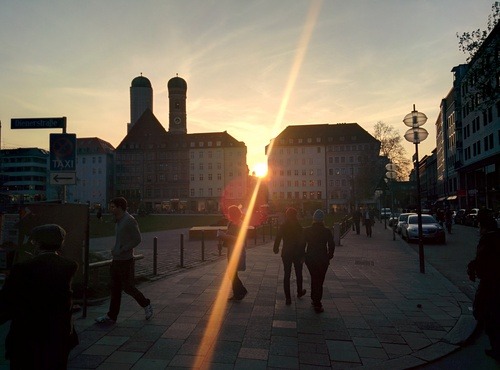
I’ve been thinking a lot about places to live. I never really planned to end up in Munich. And it’s been good to me. Oddly when I arrived I really hated Munich. I’d wanted to be in Berlin and Munich felt far away physically, emotionally and culturally.

Today I was reading Paul Graham’s essay: Cities and Ambition. That together with lots of travelling recently have reminded me that I’ve been in Munich for longer than any other city since my childhood.

I’ve lived in the following cities: Cape Town, London, San Francisco, Berlin and Munich. And I have felt drawn to the following cities when I visited them: Stockholm, Cambridge (UK) and Portland.

What makes a great place to live?

My shortlist (more like a long-list) comes down to being near good universities and the halo effect they have on both attracting smart people and creating a good talent pool to hire from.

Paul Graham’s essay talks about the message a city sends you when you are living there. He also talks about what makes a good startup hub (summary: where it’s normal to start something and where there is a high enough concentration of “interesting” people to nudge you forward). Does the city cherish culture? Money? Health? Wealth? Knowledge?

Last year I was waiting for a friend outside a Berkley brunch spot and overheard a conversation “Yeah! I planned on just taking six months off and trying the idea out”. That conversation is etched in my memory. What a great attitude to have. I wanted to dive right into the conversation, find out more about their idea and offer encouragement.

So I was thinking about my ideal city, I’d love to be around interesting people that “take six months off to try the idea”. I’d like to be in a space that affords doing that and having a comfortable-ish life. For me comfortable is cycling to work, being near nature for running and sport, and having a vibrant “alternative culture”. It’s not that I’m at the stage of my life where I need to run off to clubs or go on anti-war rallies. But an alternative culture is usually indicative of, and exists because other “non-alternative” people support, or at least don’t mind too much about it. In other words, you aren’t living in the conservative heartland.

And so I made a shortlist

But back to the ideal city. Good universities, interesting people, and a chance to escape into nature.

Towards the end of last year I was in Bucharest, with the view to moving there. But it didn’t capture my imagination. People were moving in a different direction: a rush to be rich. Have a second car. Afford more. I’m trying to simplify: less is more. More time to focus on what really interests me without distractions. And I would rather not drive if necessary.

Also last year I was thinking of moving back to the UK. London specifically. There’s a part of me that really misses London. I miss my native language. I miss the more “can-do” attitude of the Brits (compared with the German “what if we screw up and it’s not perfect” outlook).

But I never lied the weather in London. The outdoor cafe culture that good weather fosters was missing, Unless you live next to Hyde Park, green is an afterthought,

But there was always one city sending me signals. One city that I had a fling with. And has been trying to send a message over the years. Berlin.

Berlin is open to ideas. Open to a multicultural life. Has good universities, interesting people and an alternative culture and general population with a more liberal outlook. I can cycle to work. Wherever that may be.

I’ll be landing there on the 3rd October 2014.
Should anyone ask, today I got rid of my CDs and DVDs

Many years ago I’d go on after work and weekend trips to Tower Records in Piccadilly Circus or the Virgin Megastore at Tottenham Court Road. I’d carefully browse the albums, hoping that they were good, often having to judge the album by the cover art or guess the quality based on the record label. And then plunk down 15 to 20 Pounds for an album.

And I slowly built up a huge CD and DVD library. These followed me to California, Back to London, then Munich. And have sat in my cellar for the last 8 years. A huge box that was unwieldy to move around and weighed on my mind as something that I should deal with. Something that I should sort out. Something that I should get rid of. Even though they were all ripped into a lossless format I still clung to the memory of putting them on a player, listening to them, sharing them. There was something about the physicality of them that I had a hard time letting go of.

And then I took them to a flea market and sold a few. And found a few that I’d wanted to double check I still had a good rip of. And then gave them all away. 

It feels good letting go. No more carting them around. No more 50kg of laser etched polycarbonate.

It’s interesting how the world is slowly changing from treasuring the physical to one where we subscribe to a music service for 100 Euro a year. But that’s another blog post. For the moment, I’m happy to have less stuff in my life.

Should anyone ask: the 30 day experiment

The idea is that for the next 30 days. I left the Vipassana course early. But I did learn a few things:

  • my brain is very busy:
  • I think about work about 80% of the time
  • I think about relationships about 20% of the time

If I’m thinking about work so much I need to work out how to harness that energy. This is an experiment to see what happens, if my life could be differently if I change a few things.

This is a list of things I would like to do differently.

Firstly, ask for help. So every single day, I reach out and ask for help. It could be contacting a friend and asking him to join me as a co-founder. It could be reaching out to a good friend and asking him for tech proofreading help. I’m going to reach out, and track what I ask for and then monitor the response. Another is asking an ex-boss for feedback on strategy. But every day drilling into a question or ask and then seeing how it works.

Secondly, I’m going to do more sport. While I was at the meditation course I found it incredibly frustrating to sit with 60 other people all focusing on something. I felt trapped, missed my freedom and could only focus on getting-out. But I did come away realising that I do most of my good thinking when I’m running. Problems untangle themselves with the repetitive pounding on the ground. But I’ve been in the habit of running and listening to podcast. So this goal is to run for 30 days (minus the days I’m doing other sport) just listening to music and not listening to and having my thoughts guided by a podcast. 

The third goal is sport. I’m so much happier when I’m doing sport. This goal is to do it ever day. Even if it’s something small like 10 minutes of stretching. But to keep it up. 

Fourthly

doing some meditation. That could mean getting up and meditating in bed or sitting in the living room. For just 5 minutes. 5 minutes every day and seeing what I’m thinking about and seeing where my mind is going. Some time for myself.

Fithly. Starting the “things that weigh me down list”. There a bunch of small things that I hate thinking about. Finance and invoicing. Physical things that hold me back. For example all the stuff in the cellar. The things that were once useful and are no-longer necessary. Paying bills. Piles of paperwork. These things build up and hold me down. This goal is to get them onto a list and out of my mind. And perhaps loop around to the ask for help lists.

And at the end of the 30 days: review progress. I sometimes feel I could be much more successful if I was more focused about achieving goals.

But to do this, what is success? Success for me is contentment. I get my contentment from learning. (a bit problem I had with the meditation course is that I didn’t feel like I was learning/I was learning but without the external stimuli and was hard for me go forward). My brain is a song and needs to be absorbing. Success is also financial independence. I need to charge more for work and also it would be nice to start building up more savings and indepence. I’m not quite sure how I’m going to do the next months without a stable income. But we’ll see.

Success is also having a clear mind.  A freer mind. A mind that isn’t bogged down by concerns. My mind is constantly thinking about work stuff and it would be nice to find a way to restrict that to work times.

But for gods sake. Success is also about being happy and having fun. I noticed one of the guides at the meditation course was a very nice guy when I started talking to him about leaving. But before I got to know him he looked like a really stuck up guy. He didn’t smile and was running around with a very very serious looks. So to me success is about having fun and enjoying life.

Should anyone ask, I’m looking into the fire.

image

Depending on which Meyers Briggs test I take, I come out as an introvert and sometimes an extrovert. This post is about caring for the introvert.

Usually I try to take my weekends, kicking back, being in the mountains, hiking. And sometimes just waking up on Saturday after deliberately not committing to any events during the weekend and seeing what happens,  and at my own pace. At the moment I’m balancing two jobs: it’s taxing. A tax that I’m working to reduce as soon as possible. It’s not fair on myself and not fair to the buddycloud team.

It’s the introvert that needs some downtime. This is the man-cave moment when you need to be alone to think, recharge, update. An ex called this my looking into the fire time and would give me a hard time for it. I’m comfortable with my need for it and am a much nicer person to be around when I’ve had it.

The downtime helps me find clarity in my thinking.

Looking into the fire comes from being in a quiet environment that encourages zoning out. Zoning out can mean working on silly computer projects: tweaking a RaspberryPi, updating firewall rules. Both completely inane things and the world would continue without them happening.

Getting out: running or swimming or taking a long walk also helps. The repetition gets the good thoughts happening.

I’m currently looking into the fire by going to the library and catching up with the world on a slow internet connection. The slow internet connection is a helper: I focus on emails and catching up with planning documents, plans and upcoming speeches. Strategically using the 64Kbit connection on my phone for the important tasks.

Looking into the fire enables the deep thinking necessary for the next few months’ flurry of activity (and there’s going to be lots of that). Some of this will be buddycloud: ramping up on the Android client. Getting stronger on buddycloud installs. And pushing our marketing and funding agenda.

Looking into the fire is like the necessary reboot to get back on top of things. And being on top of things is a good feeling.

Aaron Swartz

As someone who has struggled with depression, I find it terribly sad to read all the news of Aaron’s recent suicide. Many of my friends also struggle with depression and with fighting for information laws to change. They are also incredibly smart and see the world in a different way to those that seek the status-quo.

My natural reaction is to jump to finding solutions to the problems he was working on – getting rid of bullying prosecutors and opening up academic publishing. But what’s the point when a society doesn’t value the individual champions of freedom like Aaron? This type of change needs to be deep rooted; and it’s not going to change in a decade.

Change must start with how our children start interacting and respecting others opinions in pre-school and continue up to their adult lives…

…but that’s again looking for solutions. Now is a time to be sad and remember him and what he stood for.

image

Should anyone ask, I’m working on some really cool technology right now.

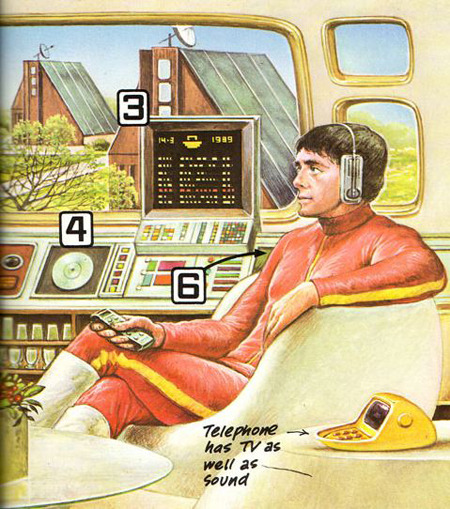
As a kid of about 8 years I used to spend my afternoons during the long school holidays going to the local library. There I would sit down and read books (my favorite was the Usborne Book of the Future) on how life would be in the future. Usually this was amazing things that were promised to occur around the year 2000. I would pour over the pages of people living in space and will time to speed up so that I could begin living the wonderful promised life. And then 2000 happened and well not much. No space communities. No flying cars.

So instead of willing time to speed up, I’m taking a different tact. I’m working on building the future.

I’ve been so busy the last few months working on some really cool technology with a really cool team. I believe that what we are building will really change how we communicate with each other and be free of any single company controlling the technology (similar to how email works – you have a choice of providers).

Federated buddycloud channels are a way that anyone can run their own social network and all the social network nodes interconnect and pass information to eachother.The idea with buddycloud channels being federated is to keep the architecture and protocol as simple as possible by glueing together best-of-breed existing protocols into a recipe and developing client and server implementations that show off how this works.

The development team is growing, everyone donating time and effort to the project and it’s great to see the level of enthusiasm behind this. Thanks.

If you would like to play a role in building some disruptive technology, head over to the federated social networking development pages.

… and welcome to the future.

Should anyone ask, I’m working on some really cool technology right now.

As a kid of about 8 years I used to spend my afternoons during the long school holidays going to the local library. There I would sit down and read books (my favorite was the Usborne Book of the Future) on how life would be in the future. Usually this was amazing things that were promised to occur around the year 2000. I would pour over the pages of people living in space and will time to speed up so that I could begin living the wonderful promised life. And then 2000 happened and well not much. No space communities. No flying cars.

So instead of willing time to speed up, I’m taking a different tact. I’m working on building the future.

I’ve been so busy the last few months working on some really cool technology with a really cool team. I believe that what we are building will really change how we communicate with each other and be free of any single company controlling the technology (similar to how email works – you have a choice of providers).

Federated buddycloud channels are a way that anyone can run their own social network and all the social network nodes interconnect and pass information to eachother.The idea with buddycloud channels being federated is to keep the architecture and protocol as simple as possible by glueing together best-of-breed existing protocols into a recipe and developing client and server implementations that show off how this works.

The development team is growing, everyone donating time and effort to the project and it’s great to see the level of enthusiasm behind this. Thanks.

If you would like to play a role in building some disruptive technology, head over to the federated social networking development pages.

… and welcome to the future.

Should anone ask, treat life as an expriment

Three great tastes come together in this video: Stanford lectures (awesome people talking about awesome things) and IDEO (awesome design) and personal development (becoming even more awesome) come together in this video.

Here is Tom Kelley, General Manager at IDEO

http://ecorner.stanford.edu/swf/player-ec.swf

What does concern me through is that sometimes we need to dig in to get beyond the “experiment with everything” phase of our lives. Not everything will be the enjoyable experiment. That said, I have noticed that I work much better on things that I enjoy.  Much! Thoughts?